What Makes Starlink Different From Other ISPs in Kenya? Complete 2025 Comparison

Kenya’s internet market is evolving rapidly, with traditional ISPs like Safaricom, Zuku, and Faiba competing for dominance. Yet, the entry of Starlink, SpaceX’s satellite-powered internet solution, has completely transformed the conversation.
If you’ve been wondering what makes Starlink different from other ISPs in Kenya, this guide dives deep into coverage, technology, costs, and performance. Let’s explore how Starlink stacks up against conventional providers and why it’s a game-changer for millions of Kenyans.
Introduction: Internet Connectivity Challenges in Kenya
Overview of Kenya’s ISP Landscape
Kenya has one of the most advanced ICT sectors in Africa, yet reliable internet access remains uneven. While cities like Nairobi and Mombasa enjoy fibre and 4G connections, rural regions still suffer from weak or nonexistent coverage.
The Rising Demand for Reliable Internet
-
Remote work and freelancing growth post-2020
-
Increased demand for e-learning in rural schools
-
SMEs requiring consistent connections for business operations
-
Growth of digital services such as fintech and e-commerce
Understanding Starlink
What is Starlink and How Does It Work?
Starlink is a satellite internet service developed by SpaceX. Unlike fibre or mobile networks that depend on ground infrastructure, Starlink uses a constellation of low Earth orbit (LEO) satellites to deliver fast, low-latency internet globally.
Starlink’s Presence in Kenya
Starlink officially entered the Kenyan market in 2023, offering coverage across the country, including remote and underserved regions.
Traditional ISPs in Kenya
Safaricom Home Fibre
-
Offers fibre internet in urban areas
-
Known for stability but limited coverage outside cities
Zuku Internet
-
Popular for bundled TV + internet packages
-
Suffers from frequent downtimes and congestion
Faiba by Jamii Telecommunications
-
Affordable data bundles and fibre packages
-
Limited coverage beyond Nairobi and select towns
Telkom Kenya & Airtel
-
Mobile internet options
-
Good for urban users but poor consistency in rural regions
Key Differences Between Starlink and Other ISPs
Coverage and Availability
-
Starlink: Nationwide coverage, including rural areas.
-
Local ISPs: Primarily urban-focused.
Installation and Setup Process
-
Starlink: Self-install kits such as the Starlink Standard Kit V4.
-
Local ISPs: Require technician visits and fibre installation.
Internet Speeds and Latency
-
Starlink: 50–250 Mbps with latency as low as 25ms.
-
Local ISPs: Fibre can reach 100+ Mbps, but mobile ISPs often fluctuate.
Reliability During Outages
-
Starlink satellites bypass ground infrastructure, ensuring uptime even during local outages.
Portability and Mobility
-
Starlink kits are portable, unlike fixed fibre setups.
Pricing and Subscription Models
-
Starlink: Higher upfront cost but consistent performance.
-
ISPs: Lower monthly rates but limited availability.
Data Caps and Fair Usage Policies
-
Starlink provides more flexibility compared to capped mobile data plans.
Technology: Satellite vs Fibre vs Mobile
-
Starlink: LEO satellite-based internet
-
ISPs: Fibre optic, 4G, and fixed wireless
Starlink Hardware Options in Kenya
Starlink Standard Kit V4
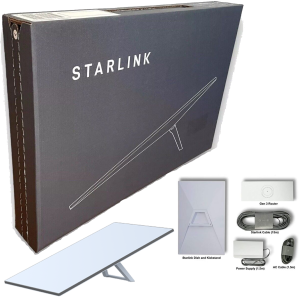
The Starlink Standard Kit V4 (dofollow) is ideal for residential users. It includes:
-
Dish, Wi-Fi router, cables, and power supply
-
Easy setup with the Starlink app
Starlink Flat High Performance Kit
The Starlink Flat High Performance Kit (dofollow) is designed for businesses and heavy users. Benefits include:
-
Wider field of view
-
Better performance in harsh conditions
-
Recommended for mobility solutions (RVs, boats, field projects)
Benefits of Starlink Over Traditional ISPs
-
Works anywhere in Kenya
-
Low latency suitable for gaming
-
Reliable speeds even in remote areas
-
Self-installation without technician delays
Limitations of Starlink in Kenya
-
High initial hardware cost
-
Subscription fees are higher compared to Zuku or Faiba
-
Performance may fluctuate in extreme weather
Case Studies: Starlink vs Other ISPs in Kenya
Starlink in Rural Villages
In remote areas like Turkana and Marsabit, Starlink is often the only viable option for fast internet.
Starlink for Businesses and SMEs
Many SMEs are turning to Starlink for redundancy when fibre outages occur.
Starlink for NGOs and Remote Projects
NGOs conducting humanitarian work rely on Starlink to stay connected in off-grid areas.
Future of Internet in Kenya with Starlink
-
Bridging the digital divide in rural communities
-
Enabling e-learning platforms for schools
-
Supporting remote work & freelancing economy
-
Strengthening Kenya’s digital economy
Trusted Starlink Providers in Kenya
Starlink Kenya
For official installations and support, check Starlink Kenya.
Partner SEO Services
For businesses that want to scale online, Reisen SEO offers digital marketing expertise.
FAQs on Starlink vs Other ISPs in Kenya
Q1. Is Starlink faster than Safaricom Fibre?
Yes, especially in rural areas where fibre isn’t available.
Q2. Can I move my Starlink kit across Kenya?
Yes, Starlink supports mobility within the country.
Q3. How much does Starlink cost in Kenya?
Around $600–$800 upfront for equipment, plus a monthly subscription.
Q4. Does Starlink work during blackouts?
Yes, if connected to a backup power source.
Q5. Is Starlink suitable for businesses?
Absolutely—especially in areas where fibre is unreliable.
Q6. Where can I buy Starlink kits in Kenya?
From trusted partners like Spacelink Kenya and Starlink Kenya.
Conclusion: Why Starlink is Transforming Kenya’s Internet
So, what makes Starlink different from other ISPs in Kenya? It’s the coverage, reliability, and technology. Unlike traditional ISPs that struggle with rural reach, Starlink provides internet access anywhere with a clear sky view.
While the initial cost is higher, the benefits—portability, speed, and reliability—make it worth every shilling. Whether you’re an individual, business, or NGO, Starlink is redefining Kenya’s digital landscape.
For equipment, explore:
For trusted setups, visit Starlink Kenya.